

Stargazing with Kids: Making Astronomy Fun for the Whole Family

The enchantment of a starry night sky has captivated humankind since the beginning of time. Imagine sharing this timeless wonder with your children while traveling, transforming a simple night under twinkling stars into an amazing journey across the universe. Stargazing isn’t just a calming recreational activity – it’s a door to infinite curiosity, a love for science, and an appreciation of natural beauty. We’ve compiled this star-filled guide to help you and your little astronomers navigate the wonders of the cosmos while creating unforgettable memories.
- Building Anticipation: We’ll help you prepare your young ones for an exciting night of stargazing.
- Choosing the Best Spot: Learn how to choose the optimal location that would make the experience more magical.
- Fun Learning Activity: We’ll show you how to mix fun and education by turning the night sky into a gigantic storybook.
- User-friendly Tools: We’ll introduce some simple stargazing tools that are kid-friendly.
- Boosting Imagination: We’ll suggest methods to encourage imagination while stargazing.
“Stars are the landmarks of the universe.” – Sir John Herschel, 19th-century astronomer.
Setting the Stage: Prepping Your Kids for a Night Under the Stars
Stargazing can be an enchanting and educational experience for youngsters. The key to an enjoyable and thought-provoking evening is in the preparation. Start your celestial journey by gathering essentials for an engaging stargazing session with your kids.
Invest in a kid-sized telescope, a powerful tool to bring the distant stars closer and kindle their interest in astronomy. Use a children’s stargazing app to help identify the stars, planets, and constellations in your field of view. You can even download stargazing activity books or cosmic coloring pages for downtime or while waiting for the skies to darken.
Balance education with fun by packing some space-inspired snacks. Think astronaut ice cream or star-shaped cookies to keep their energy levels fueled and enthusiasm high.
Lastly, don’t forget a red flashlight. Why red, you may ask? The red light is less likely to ruin night vision, helping you and your little ones to see the stars more clearly. And of course, it adds a touch of drama to your stargazing adventure!
Pro tip: Don’t be too dependent on the clear sky. Unexpected weather changes might get in your way. Always have a backup plan. Perhaps a constellation storybook to read or an astronomy documentary to watch could be equally enjoyable if the clouds decide to gatecrash your stargazing party.
Remember, keeping the night interactive and stimulating is key to making stargazing a fun and educational activity for your kids while traveling.
Choosing the Perfect Spot: Optimal Locations for Stargazing with Kids
When seeking out the optimal location for a delightful stargazing experience, the darker the better is the golden rule you should remember. Light pollution, resulting from artificial lighting in city areas and suburbs, can significantly affect your ability to see the stars clearly. This pollution washes out the light of the stars, making them less visible and, thus, less awe-inducing for your little eager astronomers.
To make your stargazing trip captivating and fruitful, try to find locations away from the city lights. National parks, open countryside, mountain regions, or rural beach locations usually provide darker skies, and subsequently, a more vivacious view of the starry night. If you’re unable to venture far from the city, seek out local parks or open spaces with less light interference.
If you’re curious as to where the best spots in your area might be, a ‘light pollution map’ can be a valuable resource. These maps, accessible online, highlight the areas with the least light pollution, helping you find the optimum spots for you and your kids to gaze at the stars.
Remember, safety should also be a top priority when planning a night under the stars with your kids. Ensure the spot is safe and secure, suitable for a family late-night visit. A bit of exploration beforehand during daylight hours can be a practical and fun adventure for your family. Make a day of it—scout the area, check out the amenities, and pick out the perfect place for your blanket and telescope. This can ensure a smooth, stress-free stargazing experience when the night falls.
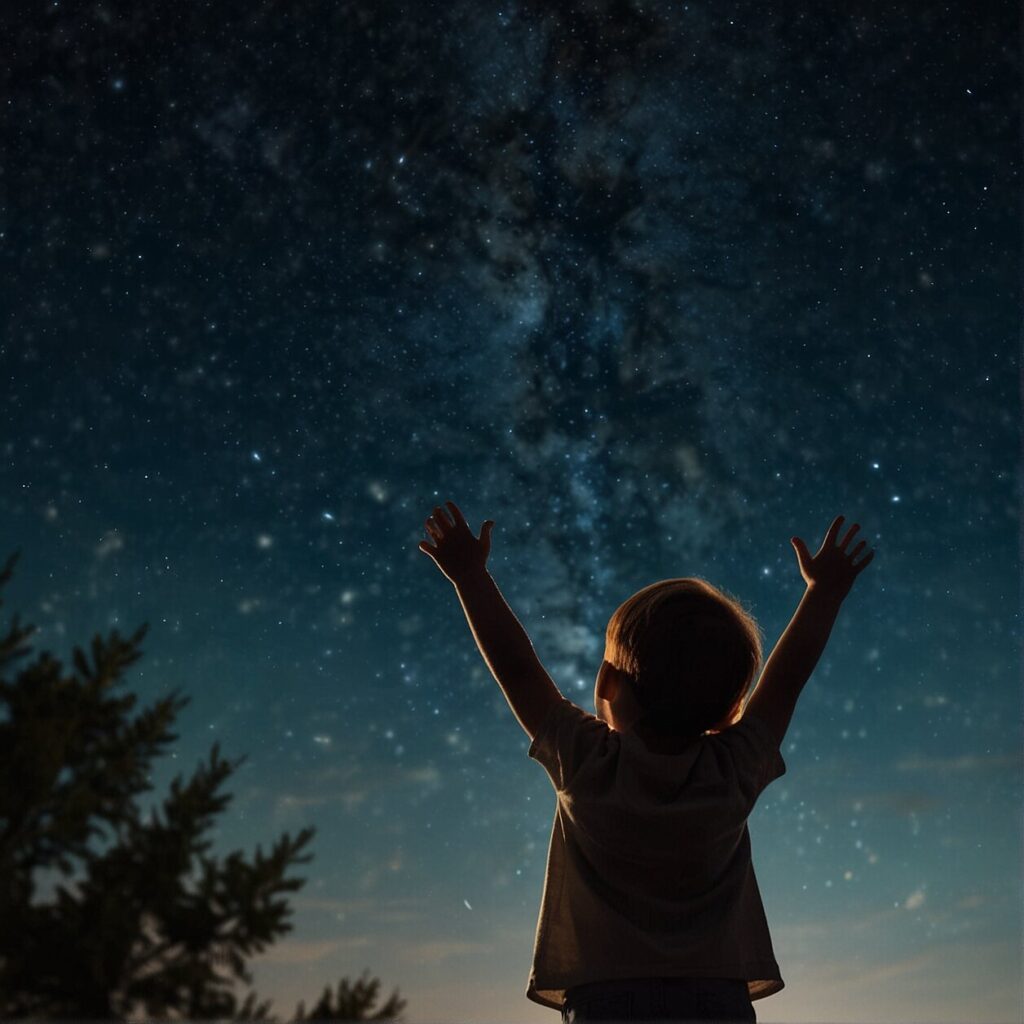
Turning the Sky into a Storybook: Fun Ways to Teach Kids about Constellations
Enthralling your children with legends and myths associated with constellations can be an immensely fun and engaging way to explore the night sky. This not only enriches their imaginations but also imparts some astronomical knowledge. For instance, did you know that the stars forming the constellation ‘Orion’ represent a brave hunter from Greek mythology?
If the idea of storytelling dazzles you as much as the stars do, try this simple method to explain the constellations to your little ones: Find a constellation, such as Orion or the Big Dipper, that is clearly visible. Describe to your kids the pattern or the ‘picture’ that the stars form. Then begin spinning a yarn that incorporates the ‘characters’ represented by these stars. This makes it easier for them to identify the constellation in the sky and remember its positions and patterns.
For an interactive stargazing experience, consider involving your children in making a star map. It may sound complex, but it is a fascinating and educational activity that yields a pleasing result. Sit down with your little ones and sketch the night sky, drawing and labeling constellations as per your observations. You can use a simple constellation guide available online or invest in Sky & Telescope’s family-friendly projects for reference.
Remember, the aim is to bond with your kids and reignite your wonder for the universe. Enjoy the awe-inspiring moments that stargazing with kids offers, and let the sky be your storybook each time you look up at the stars.
Eye on the Sky: Simple Stargazing Tools for Kids
When embarking on a stargazing adventure with your little ones, some simple tools can enhance the experience. One of these is a pair of binoculars. A standard pair can help bring far-off stars and celestial objects into clearer view, adding depth and appreciation for the vastness of the night sky.
If you’re looking to elevate your stargazing game, consider investing in a starter telescope specially intended for beginners. But remember, the best instrument for stargazing is the one that gets used, so ensure that it’s easy to handle and not too heavy for your child to use.
Moreover, star charts or smartphone apps can help you and your kids locate various celestial objects in the sky. These can aid in identifying constellations, finding planets, and more. Many of these apps offer real-time tracking, allowing you to spot passing satellites or even the International Space Station!
DIY Stargazing Tools for an Interactive Experience
Hands-on learning always remains a fun way to engage kids. Building a simple telescope from household items can serve as an exciting project that your kids can get involved in. This not only sparks their curiosity but also gives them a sense of accomplishment once they use the homemade telescope to gaze at the stars.
Furthermore, encourage your kids to make their own star charts. Creating their own map of the night sky can help them develop an understanding of the constellations and their locations, fostering both learning and creativity. Additionally, keeping a moon journal over time can illuminate the lunar cycle and enhance their appreciation for this close celestial neighbor.
Between ready-made tools and DIY projects, you can create a dynamic mix of stargazing activities that don’t simply entertain but educate as well. Remember, the ultimate goal is to develop your child’s love for the stars and instill in them a deeper understanding of the universe they are part of.
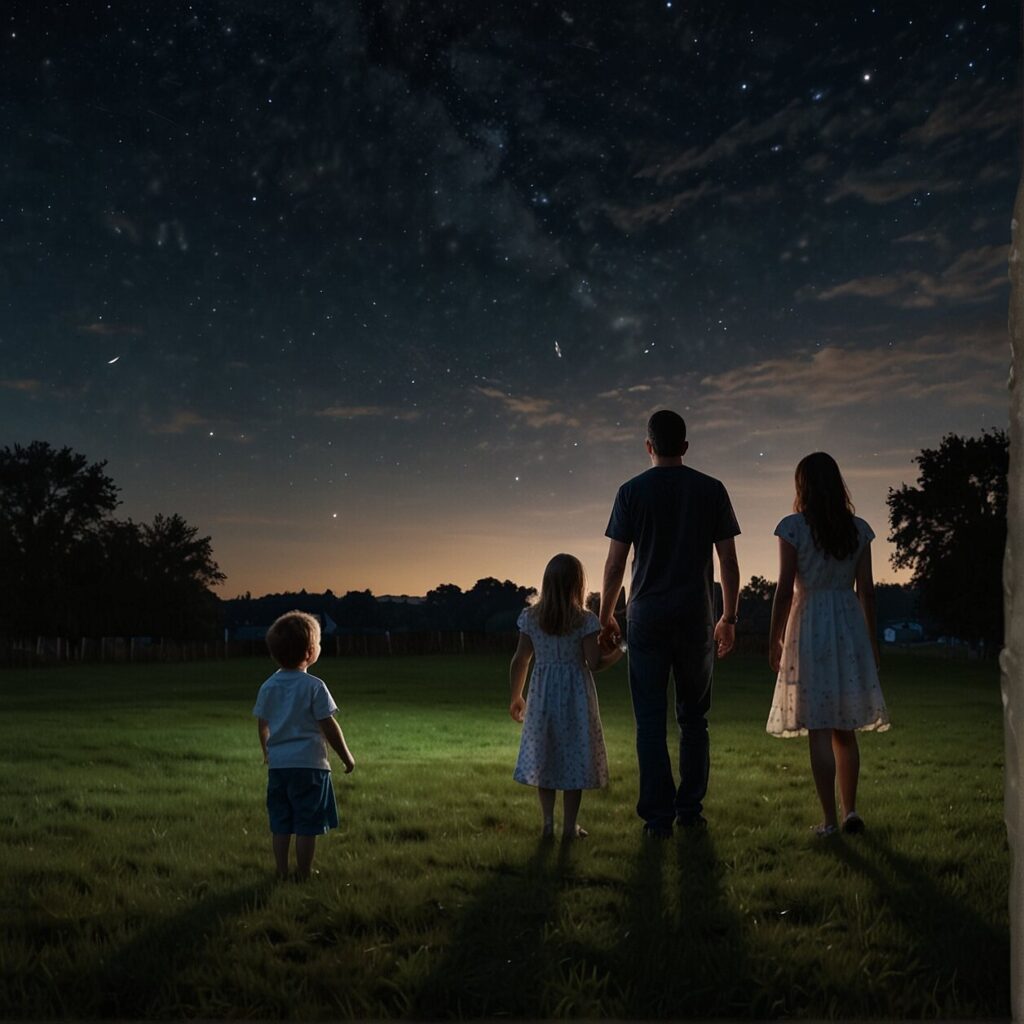
Shooting Stars and Make a Wish: Encouraging Imaginations While Stargazing
Stargazing trips are as much about igniting imaginations as they are about observing celestial bodies. The sight of a shooting star streaking across the night sky can spark a world of wonder in a child’s mind. As an adult, you can harness this moment of awe by introducing the endearing tradition of making wishes on shooting stars.
Explain to your kids that people have been making wishes on shooting stars for centuries, turning this scientific phenomenon into a portal for hope and aspiration. This combines a thrilling spectacle with a personal, imaginative aspect that can truly captivate your child’s interest and cultivate a more profound curiosity about the cosmos.
Another way to inspire imagination is to encourage your children to create their own stories or myths about the constellations, just like ancient civilizations did. This exercise not only stimulates their creativity but also enhances their engagement with the stargazing experience. To make it more enticing, consider turning it into a contest or incorporating it into a cosmic-themed storytelling session around a campfire. Let the beauty of the night sky be the canvas for their imaginations to run wild.
Bear in mind, nurturing these creative elements alongside the educational aspects of stargazing truly elevates the experience, making it a memorable for adventure your children. This adventurous blend of science and imagination is what makes stargazing an enriching and fun-filled activity for the whole family.
FAQ’S
Now that you’re equipped with tips and know-how, you’re almost ready to hit the road and explore the starry heavens with your little ones. But, as is often the case with children and stargazing, you might still have a few questions. Let’s dive into some frequently asked questions to clear up any remaining doubts and ensure your celestial adventures are a resounding success.
How to keep kids engaged during a stargazing session?
Keeping kids engaged during a stargazing session doesn’t have to be a herculean task. Start by introducing them to an interactive children’s stargazing app. These nifty digital tools not only make stargazing more fun but also help kids to learn about stars, planets, and constellations in a playful and engaging manner. In a way, they turn the sky into a vast interactive playground that kids can explore.
Apart from digital tools, traditional physical resources like activity books and cosmic coloring pages can help keep your little travelers entertained. These books often come with interesting stories and facts about celestial objects, helping kids to learn while they have fun. Cosmic coloring pages, on the other hand, are a creative way to keep your kids involved, helping them to visualize and remember the constellations better.
Also, consider bringing along a kid-sized telescope. The thrill of viewing distant stars, planets, and cosmic phenomena through the lens of a telescope can be an unforgettable experience for them. It gives them a sense of adventure and makes them feel like little astronauts.
In-between regular stargazing, you can also organize mini “Star Quests”. Ask your kids to identify certain celestial objects or constellations, and reward them with space-inspired snacks when they’re successful. It’ll keep them eagerly looking for more wonders in the sky.
Finally, bring a red flashlight, the quintessential stargazing accessory. Not only does it allow you and your children to see in the dark without disturbing your night vision, it also adds to the overall ambiance of the experience. Trust me, your kids will love it and feel like they’re on a real cosmic adventure!
What are the best times for stargazing with kids?
Timing is key when it comes to stargazing with children. Generally, the best time to start is just after dusk or right when the stars begin to twinkle. During these early evening hours, your kids can slowly become accustomed to the dark sky, and the cooler night air isn’t as cold as it will be later into the night.
Plan your stargazing adventure on nights with a new moon or when the moon is just a small crescent— this is when the stars shine the brightest. Also, the celestial show is often more impressive during the colder months since the nights are longer and clearer. However, consider the comfort of your little ones too, as depending on the location, winter nights might be too chilly for them.
Bear in mind though that the appearance of certain stars and constellations changes with seasons, so what you’ll see in the summer may not be visible in the winter. It could thus be a fun idea to make a habit of going stargazing different times of the year to witness this celestial variety.
Last but not least, always keep an eye on the weather forecast. Cloudy skies could obscure your view of the stars and adverse weather conditions could potentially ruin your adventurous night out.
What are some kid-friendly constellations to look for?
The sky is a vast expanse of wonder, and spotting constellations can turn your stargazing trip into a hands-on science lesson. But remember, for the young ones, it’s about making the exercise easy and fun. So, start with some simple and recognizable constellations that will get them excited about exploring the heavens above.
One notable constellation beloved by youngsters is the Orion, also known as ‘The Hunter’. The three bright stars making up Orion’s ‘belt’ make it instantly identifiable, offering an engaging point of focus for your young stargazers. Fun facts: Can you spot the Orion Nebula? It’s the ‘middle star’ in the sword that hangs from Orion’s Belt – a fun fact to share with your kids to increase that ‘wow’ factor.
Second on our list is Andromeda, which is more challenging to find but offers a treat once spotted. This constellation is home to the Andromeda Galaxy, the most distant object you can see with the naked eye – approximately 2.5 million light-years away!
Next, introduce your kids to Pegasus, the winged horse. This constellation’s primary feature is a large square known as the Great Square of Pegasus, making it visible even under moonlit skies.
Finally, don’t forget about Ursa Minor, the Little Bear, which is a crucial part of the cosmic geography. Identifying this constellation is fun and educational because it leads to the North Star (Polaris), important for navigation. Keeping an eye on the Little Dipper (which forms part of Ursa Minor) can be a delightful way to end your stargazing session.
By focusing on these kid-friendly constellations, you can help kids to engage with the cosmos in an accessible way that will stoke their interest and curiosity.
How to make a stargazing trip educational for kids?
Transforming a stargazing trip into an immersive, educational experience for your little ones is easier than it may seem. Keep their interest piqued by revolving the expedition around a structure that allows them to learn, discover, and most importantly, have fun!
Begin with framing a basic understanding of what stargazing is and why we do it. Discuss the science behind the night sky and the constellations that embellish it. Simple, easy-to-understand explanations about the solar system and our place in it can set a solid base for the stargazing trip. You could use picture books or readily available online resources to illustrate this.
Make stargazing a hands-on activity to engage kids more. Involve them in locating different stars or constellations using a telescope or even a stargazing app. Provide them with star maps and encourage them to identify as many constellations as they can themselves.
Apart from this, creating a scavenger hunt or a quiz about the night sky, the stars, and constellations can not only entertain but also educate children in an interactive way. Remember, the aim is to learn while making it an adventure.
Lastly, don’t forget to discuss the importance of nature and the environment and the integral role of stars and celestial bodies while doing so. Activities like stargazing help build an understanding of our ecosystem and our role in preserving it, which is beneficial knowledge for children.
How can I involve my kids in planning a stargazing trip?
Making your kids part of the preparations for the stargazing trip is a great way to spark their interest right from the start. Start by explaining the basics: what a stargazing trip entails, why it’s exciting, and the preparations required.
You can invite them to assist in packing the necessary supplies. These may include a telescope for kids, activity books or apps, cosmic coloring pages, snacks, and drinks. Let them select some snacks or even space-inspired recipes to make together. This concept alone can turn an ordinary evening into a fun-filled, galactic culinary adventure.
To enhance their learning experience, get your children involved in creating a simple stargazing map. This will give them the satisfaction of using their own map to navigate the night sky. Websites like Sky & Telescope provide family-friendly projects and star maps that you can print out and assemble with your children.
Also, advise them on the appropriate dress code for a night under the stars. Depending on the weather, it’s always a great idea to layer up and pack some insect repellent to ward off bugs. Remind them to prepare for changes in the weather.
Involving your kids in the trip’s planning not only teaches them about accountability and organization but also fosters their interest in the cosmos. It makes them feel important while boosting their excitement and anticipation for the stargazing trip.