

Exploring the Underwater Caves of Florida: A Scuba Adventure

Imagine an underwater world of serene beauty, where you can feel the pulse of the planet and the thrill of discovery all at once. Welcome to the magical realm of scuba diving in Florida’s underwater caves! These hidden gems are among the most spectacular diving spots on earth. Geological wonders that have taken millions of years to form, they offer an exquisite combination of unique marine life, crystal clear water, and breathtaking rock formations.
“Scuba diving in Florida’s underwater caves is like journeying into the heart of the earth, a mesmerizing experience that combines the awe of exploration, the tranquility of the depths, and the adrenaline rush of adventure.”
Whether you’re a seasoned diver seeking a new adventure or a newbie eager to embrace the mysteries of the deep, this guide is designed to provide you with valuable insights into Florida’s underwater cave diving. From logistical considerations and equipment requisites to safety protocols and diving spots, we got you covered.
- Planning and preparation
- Essential equipment
- Safety measures
- Top dive spots in Florida’s underwater caves
Diving into Florida’s underwater caves offers an unparalleled journey of discovery and a profound connection with nature, inviting us to explore a world that remains untouched by the hustle and bustle of our modern lives. So suit up, take the plunge, and experience the magic of Florida’s underwater caves! Let’s get started!
Stepping into the Abyss: Florida’s Top Underwater Cave Dive Spots
Florida is synonymous with a veritable treasure trove of underwater cave dive sites, each as enticing as the next. Picture yourself exploring crystal clear waters while navigating through intricate submerged caverns. The beauty of this adventurous endeavor is that it caters to all levels of divers with an indelible quest for underwater escapades.
The Devil’s Den in Williston is one such popular destination that would mesmerize you with its unique prehistoric charm. As you descend into this submerged sinkhole, expect to find the remnants of extinct marine creatures preserved in the limestone rock. It’s a surreal window into the past.
Equally thrilling and renowned for its stunning clarity is Ginnie Springs, a privately owned park in Gilchrist County. With a labyrinth of interconnected passageways, the springs provide fascinating underwater trails for divers, certain to offer discovery and exhilaration in equal measure.
For more seasoned divers, the Wakulla Springs comes highly recommended. Housing one of the largest and deepest freshwater springs in the world, it’s a diver’s paradise and offer boundless opportunities to marvel at Mother Nature’s underwater architecture.
Remember, each site has its unique set of challenges and beauty. So whether you’re a novice or an expert, there’s a cave waiting to be explored that will etch unforgettable memories in your diver’s heartbeat.
Equipment Essentials for Underwater Cave Diving
The equipment you use can significantly facilitate your dive, offering safety and visibility in the ghostly chambers of Florida’s underwater caves. After all, no two dives are the same, especially when confronting different cave systems. Thus, equipping properly elevates your exploration to sheer mystic marvel.
Scuba Tanks
Scuba tanks are an essential component of your diving kit. Beyond just carrying your breathing gas, the right scuba tank can affect your buoyancy and general diving experience. Steel tanks can typically endure more pressure than aluminum ones, hence they can carry more air. Moreover, they tend to hold up better long-term.
Rebreathers
Rebreathers are advanced gas management systems that recycle the gas you exhale, offering longer dive times by maximising your gas supply. They’re especially beneficial for cave diving, where staying under longer to navigate complex routes is often required.
Regulators
Your regulator is your lifeline underwater—it’s a critical piece of gear that delivers breathable gas from the tank to you. A good quality regulator will ensure smooth and easy breathing at different depths and under varying pressure conditions.
Underwater Torches
Underwater caves are dark, ominous environments. A reliable underwater torch is indispensable for penetrating the darkness and maintaining visibility. A primary torch and a backup are suggested for additional safety.
Dive Computers and Watch
In essence, a dive computer keeps you informed about critical data like depth, dive duration, and ascent rate, vital in keeping decompression sickness at bay. Meanwhile, a reliable dive watch helps manage your time underwater, another essential consideration in cave diving.
Remember, each piece of equipment in your diving setup is an essential spoke in the dive wheel. Every element should function flawlessly and in unison with the others. Before heading underwater, it’s vital to review your gear—without adequate safety checks, even the most advanced kit can falter.
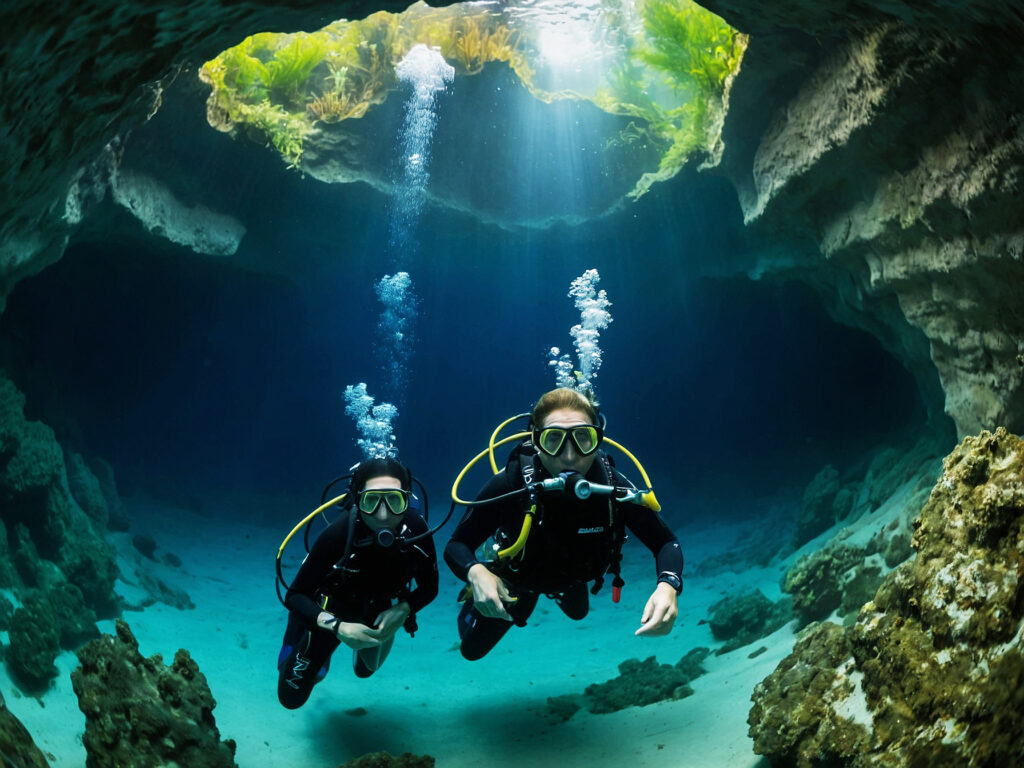
Embracing the Unknown: Beginner’s Guide to Scuba Diving in Underwater Caves
Learning to scuba dive is an exhilarating experience, and diving in underwater caves takes the thrill to a whole new level. As beginners, there are certain important aspects you need to know to ensure a safe and memorable adventure.
Training and Certification
First and foremost, getting the right training and certification is paramount. Scuba diving in underwater caves isn’t for novices. You’ll need to complete a basic open water diver course before moving on to the advanced and specialized course in cave diving. These certifications are offered by agencies like PADI and TDI.
Familiarity with Equipment
Being comfortable and knowledgeable with your equipment is another crucial factor. From understanding the use of your scuba tank and regulator to mastering buoyancy with your dive computer, make sure you get plenty of practice before you venture into the underwater caves.
Mental Preparedness
You might be physically prepared, but are you mentally ready? Cave diving requires a calm mind and a steady heart. Always remember to never hold your breath, stay within your limits, and do not panic. Regular meditation and physically demanding exercises like swimming and freediving can help build mental resilience.
Choosing your Dive Buddy
When it comes to cave diving, picking the right dive buddy is not only about camaraderie but also about safety. Your life might depend on them, so ensure they’re equally trained, responsible, and someone you trust.
Scuba diving in underwater caves is an incredible experience, but it does require preparation and respect for safety measures. As long as you focus on your training, consistently hone your skills, and maintain the right mindset, you’ll find it an unforgettable adventure.
Safety on the Surface: Pre-Dive Checks and Precautions
Pre-dive checks and precautions, though they might appear mundane, are crucial to ensuring a safe and enjoyable underwater cave diving experience. Proper checks can drastically reduce the chance of encountering life-threatening situations.
Physical Fitness Checks
Your physical condition is just as integral to a successful dive as the equipment you use. Always get a medical check-up before you plan to dive, particularly if you have any health issues or conditions that could make diving dangerous. Diabetes, asthma, heart conditions, and blood pressure concerns are some of the conditions that need to be regulated before a dive.
Equipment Check
A meticulous inspection of your scuba diving equipment is an absolute must before you dive. All your equipment, from your diving suit to the pressure gauges, must be in top-notch condition. Alert your instructor if you see any wear and tear, as even modest damage can pose a significant risk when dozens of feet below the surface.
Dive Plan Review
Ensure you have a solid dive plan at hand that everyone in your dive group understands. Familiarize yourself with signals and emergency procedures. The plan should include your entry and exit points, maximum depth, total bottom time, and air supply limits.
Weather Check
With nature’s unpredictability, it’s crucial to monitor the weather before your dive. Sudden changes, like storms or high winds, can make surfacing difficult and may create dangerous rip currents. Moreover, ensure that you’re informed about the tidal situation of your chosen dive site. A swift tide can make cave diving risky, especially for beginners.
Even as you hover at the verge of a mesmerizing underwater adventure, remember that preparation and precaution should never be compromised. Your safety and enjoyment lie in the balance.
Diving Dangers: Common Hazards in Underwater Caves and How to Avoid Them
The exhilarating realm of underwater cave diving brings with it a unique set of hazards. Knowing these risks and understanding how to avoid them can enhance your safety and enjoyment during your underwater adventure.
Low Visibility and Spatial Disorientation
Natural factors like silt disturbance can reduce underwater visibility significantly in caverns. Limited light penetration, reflections off cave walls, and divers’ bubbles can cause disorienting visual effects. It’s essential to maintain close communication with your dive buddy, and always follow the guidelines placed in the caves, such as using guide lines to navigate.
Air Supply Management
Conserving your air supply and monitoring it meticulously is imperative, given there’s no straight route to the surface for a quick exit. You need to be able to return to the cave entrance with ample air left in your tank. For safety, follow the rule of thirds: use one-third of your air supply for your way in, one-third for your way out, and keep the last third as a reserve.
Equipment Failure
Dive equipment can unexpectedly fail during a dive due to cave conditions or simple malfunction. The key to avoiding panic during such instances is being thoroughly familiar with your gear operations and carrying essential backups like an extra mask, a secondary air source, and other key items.
Tight Spaces and Overhead Environment
Underwater caves in Florida often involve navigating through narrow passages and dealing with overhead environments. It’s vital to remain calm and composed, avoiding any hasty movements that could lead to bumps or getting stuck. Regular practice at controlled sites can help improve your comfort level in such environments.
Underwater cave diving is a realm where adventure and danger coexist. With appropriate preparation, careful planning and execution, and respect for the environment, you can safely navigate these underwater labyrinths and explore their breathtaking natural beauty.
FAQ’S
Let’s now navigate towards the Frequently Asked Questions (FAQ) section. Collected from frequent inquiries by fellow divers, these questions represent some of the most common concerns and curiosities in the field of underwater cave diving in Florida. Our aim is to relieve your uncertainties and arm you with knowledge, so you can feel prepared and confident as you embark on your thrilling underwater adventure.
How do I plan a scuba diving trip to Florida’s underwater caves?
Planning a successful scuba diving trip to Florida’s underwater caves starts with research. Dive into the plethora of resources available online, read travel blogs, explore scuba diving forums, or reach out to local dive clubs for advice. This will not only give you an idea of the best spots to explore but also give you practical tips on the best times to visit, current dive conditions, and recommended dive centers.
Next, consider gaining proper training and certification if you aren’t already cave diving certified. Scuba diving, especially cave diving, is a technical sport that needs a high level of expertise. Make sure to check the prerequisites of local dive centers in Florida as some might require you to have specific certifications or a certain number of logged dives.
Once you have your certification sorted, it’s time to draft a diving itinerary and start booking your trip. Florida boasts countless dive centers, offering packages that often include gear rental, dive guides, boat transfers, and sometimes accommodation.
Remember to peruse reviews and ratings before booking. Additionally, make sure the chosen dive center practices safe diving techniques and has emergency protocols in place. Safety should always be your first priority.
Lastly, but most importantly, don’t forget to get diving insurance. Most dive centers require it and it will provide you with peace of mind knowing that you are covered in case of any unexpected incidents. Remember, scuba diving is a sport that requires preparation and caution. With these tips at hand, you’re ready to start planning your underwater adventure in the caves of Florida!

How can I learn to scuba dive in underwater caves?
Getting started with underwater cave diving is a venture that demands both time and dedication. It’s crucial not to skimp on your foundational learning, therefore your first step should be enrolling in a certified agency that provides accredited cave diving courses. The National Association of Underwater Instructors (NAUI) and the Professional Association of Diving Instructors (PADI) offer comprehensive courses for aspiring cave divers.
Progressing from a beginner to an advanced level takes a multitude of courses spaced out over a period of time. These include dives in open water to build basic scuba skills, followed by cavern diving courses to introduce you to low light conditions, and finally, complete cave diving courses. Do remember, the journey is long but rewarding, and being patient with each phase of your training will be key to your success.
Equally important is the hands-on practice you should undertake between these courses. Regularly practicing with the scuba gear and familiarizing yourself with water bodies of varying depths and environments will significantly enhance your diving instinct.
Cave diving is indeed a demanding craft, but by arming yourself with the right knowledge, strenuous practice, and a steadfast spirit, it will undoubtedly become one of the most thrilling activities you’ll have the chance to experience.
What types of marine life can I expect to see in Florida’s underwater caves?
You’re about to uncover a new world, one that’s bustling with life and beauty beneath the water’s surface. Florida’s underwater caves are a true spectacle of nature, teeming with a vast and varied marine life.
While exploring these mesmerizing waterlogged tunnels, you might encounter a number of fish species that have made the crevices of these caves their home. Freshwater eels, juvenile lobsters and a variety of small mollusks are commonly spotted in the more shallow depths.
Moving deeper, you might come across some of the area’s more unique inhabitants. Blind cavefish are prevalent in these locales. Remarkably, they have completely lost their sight from living in the dark recesses of underwater caves and instead rely on their heightened senses of touch and taste to navigate their surroundings.
But the biodiversity doesn’t stop there. Watch as curious troglobites (creatures adapted to living in complete darkness) scamper across cavernous walls. Spot the occasional crayfish or salamander patrolling the bottom of the caves. Swim amidst the radiant freshwater sponges flaring out in shades of orange, red, and yellow – a vivid contrast against the otherwise stark environment.
It’s not just the wildlife that will take your breath away. Be prepared to witness stunning coralline formations and thriving stalactite and stalagmite structures. These underwater caves are truly a diver’s paradise – they offer a captivating blend of distinct marine life set against a beautiful backdrop that seems like it’s been cut out of a fairy tale.
Remember, it’s a different world down there. Treat it with respect, and be a conscious diver. Remain committed to preserving this delicate ecosystem as you explore, and ensure your adventures result in minimal impact on their habitats. Happy diving!
How much does it cost to scuba dive in Florida’s underwater caves?
Scuba diving in Florida’s underwater caves offers a unique experience not easily matched elsewhere, but one might wonder about the cost associated with such a thrilling affair. Various factors come into play when determining the cost, which primarily includes equipment rental, the guide’s fees, and certification costs if you’re not already trained.
For equipment rental, you can expect to pay around $40 to $60 a day for a basic set-up, which typically encompasses scuba tanks, regulator, and buoyancy control device (BCD). Special equipment used specifically for cave diving, like lights, line reels, and redundant breathing systems, may cost extra.
Having a guide is essential, especially if you’re new to underwater cave diving because they can ensure your safety and also enhance your experience by showing you hidden gems within the caves. Guide fees can range anywhere from $200 to $500 per day.
If you aren’t yet certified for cave diving, bear in mind that extra training will add to your overall cost. Depending on the level and type of certification, this could range from $300 to over $1000.
So the final costs could be anywhere from as low as $200 per day to over $1200, depending on your experience, the equipment you need, and whether or not you require training. But remember, the experience of exploring the unseen underwater world in Florida’s caves is truly priceless.
What should I know about the underwater topography of Florida’s caves before diving?
The subaquatic landscape of Florida’s underwater caves is a captivating blend of unique geographical formations and biodiverse habitats. It’s essential to familiarize yourself with this underwater topography to ensure a safe and fulfilling diving experience.
The cavern systems in Florida, primarily composed of limestone, are characterized by their distinctive formations, such as stalactites, stalagmites, and flowstones. These natural sculptures plunge from the ceiling or rise from the cave floor, presenting both an awe-inspiring view and a navigation challenge for divers.
Many caves also feature silt, a fine particulate matter that can rise like an obstructing fog if disturbed. Thus, maintaining good buoyancy control restricts silt interruption, aiding visibility and preserving the cavern’s natural condition.
Besides, pay close attention to the size of the caves. While some are large enough to house a whale, others barely allow a single diver to squeeze through. A thorough understanding of the cave dimensions helps plan your path and ensures you don’t venture too far into tight areas.
Finally, familiarize yourself with tidal movements if you’re diving in sea caves. As tidal flows can significantly affect the underwater currents, knowing when to dive is crucial. It’s usually best to schedule your dive during slack tide, when water is relatively calm.
By comprehending and respecting the underwater topography of Florida’s caves, divers can ensure a safe journey into the depths while experiencing the majesty of these underwater palaces.