
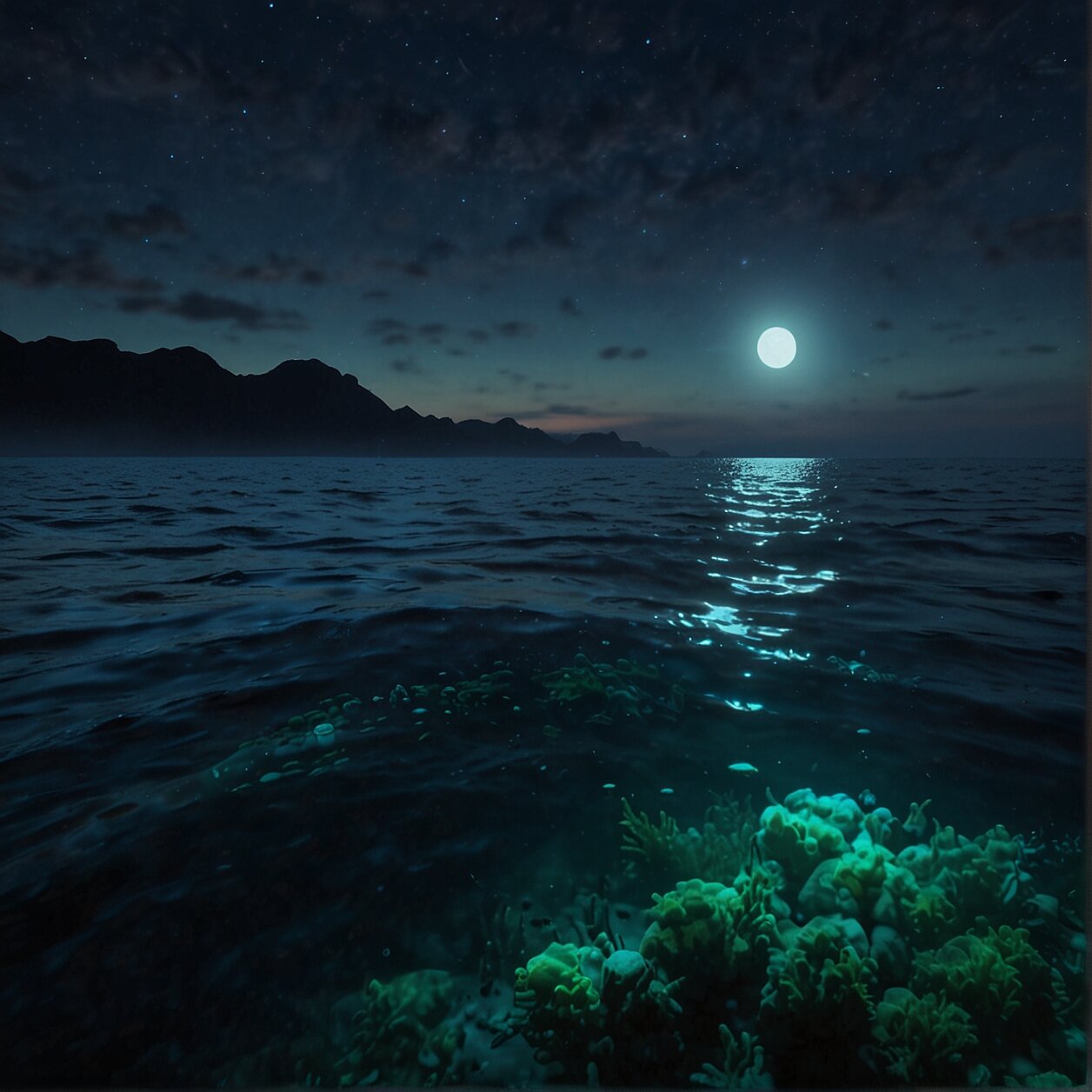
Exploring the Underwater World of Bioluminescent Plankton

Imagine swimming in an inky ocean, under a pitch-black sky studded with stars. Suddenly, as you move, the waters around you start to glow, lightening up your path, shimmering, and making you feel as if you’ve dived straight into a fairy tale. This is not a figment of your imagination but a real and extraordinary natural phenomenon, known as bioluminescence. This breathtaking experience of swimming in glowing waters exists in certain parts of the world, and it’s something you’ll remember for a lifetime. But what exactly causes this magical display of light underwater? Read on as we illuminate the secrets of bioluminescence, and reveal how you too, can dive into this otherworldly adventure.
“Bioluminescence is not just a stunning ‘light show’. It’s a fascinating science, an illuminating mix of biology, chemistry, and physics, that results in one of nature’s most surreal and enchanting displays.”
- First, we’ll introduce you to the magical world of bioluminescent plankton, the minute creatures that create this luminous spectacle.
- Next, we’ll dive deeper into the science behind how these organisms produce light and how they use this ability in their underwater environment.
- We’ll also guide you through the best places and times around the world where you can swim among the stars of the sea.
- Finally, we’ll explore the crucial ecological role of bioluminescent plankton and why their survival matters to us and the health of our oceans.
The Magical Light Show Under the Sea: An Introduction to Bioluminescent Plankton
Imagine this. You’re submerged in warm, enveloping seawater, touched only by the gentle lull of the waves. The sky above you is a tapestry of twinkling stars. As you dip below the marine surface, an enchanting spectacle unravels around you. Thousands of tiny, ethereal lights dance like fireflies, illuminating the water with an otherworldly glow. This awe-inspiring display isn’t the stuff of fantasy or fairy tales. It’s real, and it’s happening right now in oceans around the world. This is the magical phenomenon of bioluminescent plankton.
Now, you might be wondering, what are these bioluminescent plankton? Well, they’re tiny organisms that live in the sea, both in the depths and at the surface. These ocean-dwellers have an extraordinary ability. When disturbed, say by a wave or a curious swimmer, they emit a surreal, glowing light. This luminous display is a result of a chemical reaction that takes place within the plankton. The science might seem complex, but the outcome is simply mesmerizing.
Bioluminescent plankton are a part of an intriguing realm of living light. This spectacle is a natural wonder that’s as educate-able as it is captivating. As you venture on your journey exploring bioluminescent plankton, you’re in for a magical adventure that’s uniquely their own. Whether you’re a marine enthusiast, an adventurous traveler, or someone simply fascinated by nature’s wonders, the world of bioluminescent plankton opens doors to awe-inspiring sights and unforgettable experiences.
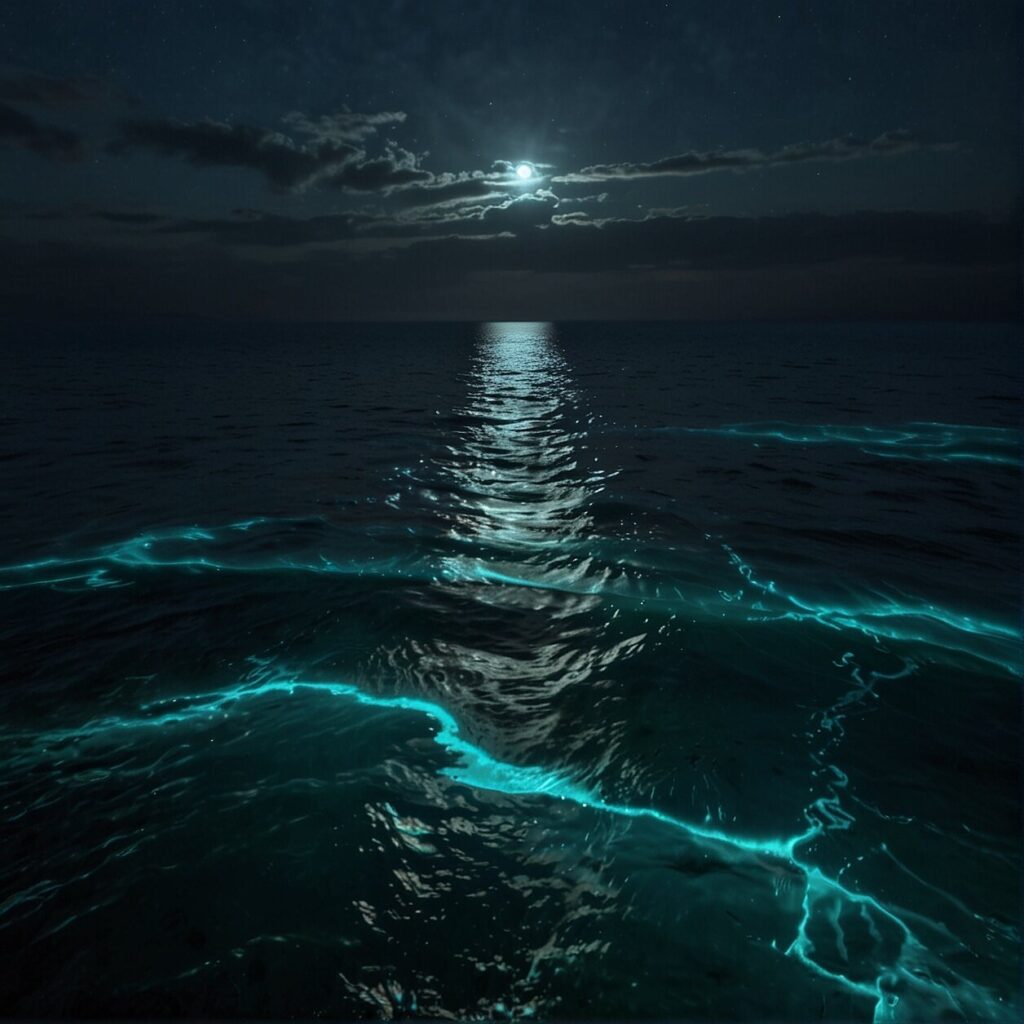
Bright Spots in Dark Waters: How Bioluminescent Plankton Create Light
So, you’re probably wondering – what’s the secret behind these marine glow-sticks? Why are they lighting up our oceanic soirees? Well, brace yourselves for a quick deep-dive into the world of biochemistry.
Biotic luminescence, or what we call bioluminescence, is a chemical reaction that results in light being emitted by a living organism. On this occasion, it’s our star of the show – the bioluminescent plankton. These tiny creatures possess a molecule called luciferin. When this luciferin mixes with oxygen, a bright blue or green light is produced. Marvelous, isn’t it?
Now you might be asking yourself: ‘why do these tiny organisms populate the oceans with their magical light?’ Well, they use their glow to their advantage in various ways. Some use it to scare off predators or to attract prey, while others use it as a mating call. You see, even in the animal kingdom, romance is not without its bright sparks!
The most common type of bioluminescent plankton, dinoflagellates, glow in a way that’s reactive to movement. So whenever these critters sense even a slight shake, they light up. This is why you’ll often witness their luminous performance when a wave crashes or when you run your fingers through the water during your moonlit swim.
Now that you’re harbor a deeper understanding of these intriguing creatures, and the chemistry that enables their glittering spectacle, you’ll be able to admire your next night swim with even greater wonderment.
Dive into the Glow: Best Places to Swim with Bioluminescent Plankton
As mesmerizing as the idea of swimming in an ocean full of blueish sparkles may seem, it’s not a spectacle you can witness just anywhere. Certain conditions must be met for these microorganisms to grace us with their radiant spectacle. So, let’s take you on a virtual tour of the world’s foremost destinations where you can dive into the mesmerising glow of bioluminescent plankton.
Starting our journey in North America, the Torrey Pines State Natural Reserve in California, USA, is a marvel at night. Home to the bioluminescent wonder called Lingulodinium polyedra, the breaking waves burst into an electric blue when conditions are right.
In Florida, the Indian River and Mosquito Lagoon, are frequented by dinoflagellates that illuminate the coastlines during the warm, summer months.
Heading south, the beaches of Vieques, Puerto Rico, offer you the jaw-dropping spectacle at the Mosquito Bay, famously known as the “Bioluminescent Bay”. This bay most frequently sees bioluminescence, due to a perfect blend of environmental conditions.
Across the globe, in Asia, the Maldives, with its warm and clear waters, is a haven for bioluminescent planktons, especially at Vaadhoo Island. The beach might seem typical during the day, but waits for nightfall to unveil its luminescent magic.
Seeking more adventure, throw yourself into the open waters at the Ha Long Bay in Vietnam, or at Toyama Bay in Japan, to experience an unforgettable dance of light in the dark.
Remember, while these spots are famous for their glowing waters, bioluminescent plankton are not always guaranteed, as they’re dependent on perfect water conditions, darkness, and lack of moonlight. With a bit of planning and a lot of luck, you too can dive into this enchanting underwater light show.
Swimming in Starlight: The Best Time and Place to Experience Bioluminescent Magic
Would you like to embrace a celestial experience without ever leaving the Earth? Do you dream of diving into a universe engulfed by a starry night sky? Your time to make this dream a reality might be closer than you think. Swimming with bioluminescent plankton, often in the warm season, is a magical encounter that is not to be missed.
Bioluminescent plankton, also known as “sea sparkle” or “blue tears”, are light-emitting microscopic organisms that dwell near the sea’s surface. They transform every wave and every splash into a mesmerizing light display, making your night swim an unforgettable experience. But when is the best time to embrace this celestial marvel?
Bioluminescent plankton usually peak during warmer months, typically between May and October. Be cautious of the moon phases! These dazzling creatures shine their brightest in the abyss of new moon nights, where the sky is darkest and the stars are most brilliant. While they can still be seen during a full moon, the moon’s brightness often obscures their soft, ethereal glow.
So where should you go for the best bioluminescent experiences? Look no further than the Indian River Lagoon in Florida or Mosquito Bay in Puerto Rico, two of the most bioluminescent hotspots on Earth. Thailand’s Andaman Sea, the Maldives, and Vieques in Puerto Rico also offer an incredible boating opportunity where each paddle stroke illuminates the water with a fairy-like glow.
Remember, this magical encounter is as much about timing as it is about location. A night dive during the warm season and a new moon, in the right location, opens up a whole new world, a glowing universe right beneath the sea. So don your swimsuit, let the darkness of the night embrace you, and plunge into the surreal glow of nature’s most illuminating show!

Bioluminescent Plankton: Exploring Their Ecological Importance
Now that you’re familiar with the mesmerizing beauty of bioluminescent plankton, let’s discover the pivotal role these microscopic creatures play within the ecological framework of our planet’s oceans. Bioluminescent plankton, crucial cogs in nature’s machine, outreach their beauty to contribute significantly to marine ecosystems.
The seemingly humble bioluminescent plankton are fundamental food sources within the food chain. They serve as the lifeblood for a vast array of marine creatures, right from tiny krill to massive whales. Simply put, without these luminous heroes, our oceans would look dramatically different, and many species might even face extinction. Imagine a sea without whales or dolphins!
These remarkable organisms don’t just contribute through nutrition – they play a vital role in maintaining the balance of our planet’s carbon cycle. Bioluminescent plankton, during their existence, absorb substantial amounts of CO2, subsequently sinking to the deep sea when they perish. This carbon sequestration plays a crucial role in reducing global warming by reducing the amount of CO2 in our atmosphere. The lights you’re diving in are in fact saving our planet, one microscopic plankton at a time.
Additionally, some species of bioluminescent plankton have the uncanny ability to disrupt sonar and radar signals. This unique trait aids marine animals with camouflage, critical for their survival against predators.
So, the next time you dive into the glowing waters, remember, you’re not only witnessing an enchanting light spectacle but also swimming amidst ecological warriors contributing to the survival of our planet’s marine life and climate. Just by existing and producing their magical light, these bioluminescent plankton are guardians of the Ocean, performing truly herculean tasks we often overlook.
FAQ’S
Few experiences in nature capture our imaginations quite like swimming in a sea filled with billions of bioluminescent plankton. The magic of being surrounded by tiny living creatures that emit a mysterious, ethereal glow in the pitch-black night is a sensory feast that stays etched in our memories forever. Below, you’ll find some frequently asked questions about this phenomenon and the beguiling experience of swimming with bioluminescent plankton. Let’s shine a light on the mysteries behind this whimsical wonder of nature.
Is it safe to swim with bioluminescent plankton?
Indeed, swimming with bioluminescent plankton is generally considered safe. These tiny organisms are not harmful to touch and interact with, letting you enjoy the spectacular light show without the worry. Although they emit light as a reaction to sudden changes in their environment, it’s not a defensive or harmful response. In fact, it’s to deter predators.
However, it’s crucial to keep two things in mind. First, as with any water-based activity, safety should be a top priority. If you aren’t a confident swimmer, make sure you use appropriate flotation devices or stay closer to the shore. Secondly, some people may experience slight skin irritation, depending on the type of plankton present. It’s always a good practice to rinse off after a bioluminescent swim to avoid potential skin discomfort.
Respecting the ecosystem is tantamount to ensuring that this beautiful spectacle continues for generations to come. Do your part while enjoying the wonders of nature by refraining from using any lotions or oils that could harm these delicate creatures and affect the water quality.
Are there tours for swimming with bioluminescent plankton?
Absolutely! There are a number of guided tours around the world that offer you an opportunity to swim among these radiant stars of the deep. Tour companies balance safety, unintrusive interaction, and an amazing nocturnal spectacle to give you a breathtaking and unforgettable experience. What could be more thrilling than finding yourself surrounded by a glimmering universe under the waves?
Tours are typically held in places where the bioluminescent plankton concentration is high, such as certain spots in the Maldives, Thailand, Puerto Rico, and various parts of Australia. You’ll take a boat out into the darkness and dive into the enchanting illumination. It’s a worthwhile adventure, particularly for those with a love of the ocean and its many wonders.
However, do remember to research thoroughly before booking a tour. Activities should adhere to responsible interaction guidelines to ensure the preservation of this mesmerizing spectacle for future generations. Therefore, go for tour operators who are ecologically conscious and have safety measures, qualified guides, and respect for local marine life at the heart of their operations.
How can I experience swimming with bioluminescent plankton?
Experiencing the magical phenomenon of swimming with bioluminescent plankton might seem like a dream, but it’s more within reach than you might think. Here’s how you can turn this dream into a reality.
Firstly, get your timing just right. The luminescent spectacle is heavily dependent on the time of the year, weather conditions, and levels of light pollution. Typically, you should aim for warmer periods with little to no moonlight for optimal visibility, such as new moon nights during summertime.
Next, choose the right location. Bioluminescence is not a widespread phenomenon, so you’ll need to head to specific hotspots for the best experiences. Destinations like Vieques and Puerto Rico’s Mosquito Bay, Jamaica’s Luminous Lagoon, Thailand’s Krabi Province, and the Maldives’ Vaadhoo Island are highly recommended because of their high concentrations of these ‘glowing’ plankton.
Invest in guided tours. Such trips are often led by local experts who understand the patterns of these micro-organisms. They will help you safely navigate to the best spots, provide understandings of the phenomenon, and share tips on capturing the spectacle on camera.
And finally, equip yourself appropriately. Bioluminescent swimming experiences are all about enjoying the spectacle while keeping yourself safe. Therefore, consider wearing a full-length swim suit or rash guard for skin protection, and always keep a waterproof flashlight handy. Remember, bioluminescent plankton may be fragile, so tread gently when swimming in these exquisite bioluminescent bays.
Ultimately, swimming with bioluminescent plankton is a surreal journey that’s truly unlike any other swimming experience. It’s a testament to the beauty and marvel of nature, reminding us of the myriad mysteries and wonders that our planet holds. So, why wait? Start planning your own bioluminescent adventure today!
Can bioluminescent plankton be harmful to humans?
Fortunately, for those of you captivated by the thought of swimming amidst a million tiny lights, you’ll be delighted to know that bioluminescent plankton, for the most part, pose no direct harm to humans. Yes, these tiny, magical sea creatures are generally safe to swim with!
However, there’s a small caveat. While most species of glowing plankton are harmless, some can cause mild skin irritation or discomfort if they come into contact with sensitive areas like your eyes. It’s also important to remember that these creatures belong to a larger ecosystem, which may include jellyfish or other marine life that could be harmful. So while the bioluminescent plankton themselves aren’t dangerous, you’re swimming in their world, and other hazards might exist.
That being said, always prioritize safety during your visit. Listen to the advice from local guides or tour organizers, especially on how to interact with the bioluminescent plankton and the potential presence of other sea creatures. It’s also strongly recommended to swim only in designated areas or during guided tours that can ensure your security. After all, the aim is for you to marvel at the wondrous bioluminescence without worrying about needless risks.
Can you capture bioluminescent plankton on camera?
Yes, absolutely you can capture the mystical sparkle of bioluminescent plankton on camera. But, there’s a slight catch! It requires particular settings and equipment to truly capture the glowing beauty of these microscopic marine life forms. Don’t fret, we’ve got you covered!
Typically, to photograph this natural light show successfully, you’ll need a DSLR or a high-end smartphone camera capable of long-exposure photography. Long exposure allows the camera’s sensor to gather light over an extended period, curating an image where the soft glow of the plankton becomes vividly visible.
To achieve this, you should use a sturdy tripod to prevent any camera shake during the long exposure time. Using a controlled environment with minimized ambient light will optimize your chances of capturing a higher quality image. Make sure your camera settings include a high ISO (typically around 800-3200 depending on your camera’s capabilities) and a slow shutter speed. The specifics of these settings can vary depending on the light conditions available, so do not hesitate to experiment.
Post-shooting, some editing might be required to make the captured bioluminescence pop out more. Tools like Lightroom or Photoshop can help bring out the details in your captured images. Remember, patience and persistence are key here, so don’t be discouraged if your first few attempts don’t turn out as expected.
Lastly, it might seem challenging at first, but with practice and the right approach, capturing the ethereal glow of bioluminescent plankton isn’t far from reach. Happy shooting!